Reading through the early 1900’s newspapers, one often comes across the lore of yesterday. The stories serve as a reminder of the wild west days of Tennessee, where wickedness and lawlessness seemed to rule the rural areas. Our family trees contain many people; many of mine in DeKalb were the salt of the earth, hard-working folks. However, like all of us, there are always a few colourful ones along the branches. William Henry Bess would qualify as one of the black sheep in mine.
In today’s world, we tend to judge the lives of those that lived before us based on assumptions we make based on today’s standards; however, that is a path filled with fraught as rarely are circumstances the same. Today we have privileges not common at the time, such as education. When reading stories that make up our families’ pasts, it is essential to take a step back and reflect on the time they occurred.
He was born in DeKalb County, Tennessee, likely in the Alexandria area, in June of 1858 to Henry Bess and Mary Elizabeth “Crook Bess. He married Delina Edge in 1876 and had two children; Aretta George, in January of 1881, had five children; lastly, Julia Wilkerson, in July of 1916 and no children resulted from this union.
William Bess named 3 of his children Mary, including his son Mary Mannie Bess, and his daughter did not know old she was at the time of the trial. Bess was a small man, weighing only 137 pounds, and viewed himself as best friends with Harve (H.M. Robinson), a prosperous farmer and member of the DeKalb County Court. However, on that fateful date in 1916, he instantaneously killed Harve with a fatal shot from his revolver.
William Bess did not plead innocent, nor self-defence, but relied upon the plea that he had to take the life of Harve to protect his daughter Mary Elizabeth “Lizzy” Bess Malone from a felonious assault. In his first trial, William Henry Bess was found guilty of voluntary manslaughter of Harve. He would be sentenced to the State penitentiary for not less than two years nor more than ten years and pay the cost of the prosecution.
Of interesting note in the trial, documents are that the undertaker had started processing the body prior to Dr. Jackson starting the autopsy, so today’s standards for physical evidence can also not be applied. He appealed this verdict in 1917 as he felt the evidence did not warrant the jury’s verdict and that, in preponderance, is in favour of the defendant’s innocence.
On Sunday morning, March 26, 1916, Harve left his house to have his hair cut. Arriving at William Stanley’s, they would share a pint of whiskey, travel up to a hallow, and share some beer. They would then visit the home of his friend William Henry Bess who lived about three or four miles west of Smithville.
By the time they reached Bess’s, Harve had reached a considerably advanced state of intoxication, and he had decided to nap. For some reason, Harve chose it to be in the room of William Bess’s daughter Mary Lizzie Bess Malone, with a friend playing music on a guitar and banjo; Bess’s son Mary Mannie Bess was somewhere close by as well.
It appears Harve had awoken, and his interests were intent on Lizzie and, in her attempt to defend herself, had struck Harve in the face with a pint bottle, which she had pulled from Harve’s pocket. Dr. Jackson, who conducted the autopsy, confirmed a scrape or bruise on Harve’s body that matched this.
Today was the Sabbath, and instead of having a peaceful afternoon of rest, a crowd had assembled at William Bess’s home to take part in drinking, making music, and dancing until late in the afternoon. As the hour neared 4 PM, the atmosphere would suddenly change when William Bess fired three shots, two of which entered Harve’s body on the left side, near his heart.
One shot entered the lower portion of Harve’s heart; another grazed Harve’s abdomen between the naval and pelvis bone. The gunshot through the heart would cause the instantaneous death of Harve.
He told his neighbour, Mr. Felix Davis, that he killed Harve after he had been knocked out twice; then walked off the room, got his pistol off a nail and then through another door and shot him. If it had happened this way, it could not be a result of aiding in defence of his daughter, as she was not in the room or anywhere near Harve. Harve had been using some very provoking and insulting language regarding the defendant and his daughter, and William Bess had “turned loose” the daughter and pushed the defendant back. He then pushes Harve twice, with Harve falling to his knees right before William Bess shoots him.
Bess is well known to his neighbours and acquaintances as the worst character. They discredited his version of events and said he should not be trusted. They also felt the same about his daughter Mary Lizzie Bess Malone, who had also been on trial for indictment for selling whisky. Bess admitted that he was a law violator and had been in jail for bootlegging and carrying a pistol. Ironically at the time of the trial, he had recently been indicted for the shooting of Maggie Fish.
Bess was known to engage in the sale of liquor and kept it under a trap door on his floor. He had been indicted three times for selling whiskey, being found guilty twice, and cleared on the third. He had paid his fines and served his jail time in both cases.
Harve was known as a prosperous farmer and member of the DeKalb County court. However, concerns were voiced about Harve, as his wife had sought legal help several times to file a bill against him on the rounds of cruel and inhuman treatment. At the time of the trial, she had brushed these off as “their little troubles.” The undertaker, Joe Robson, found a pistol in one of his pockets; however, no sign of the knife mentioned in witness testimony. Witnesses to the trial consistently confirmed that Harve’s character was not the best when he consumed alcohol, which appeared to be regular.
Did Bess shoot Harve? It was never a question to be determined; that was an admitted fact. However, it was justifiable at the heart of the matter. Evidence supports that Bess had tried to get Harve to leave several times, and Harve had pushed Bess’s father off the porch. Much of the oral testimony in the trial confirmed versions close to Bess’s and that Harve was inappropriately interacting with Lizzie.
The original jury found him guilty of voluntary manslaughter, and it does not appear he was granted a retrial. It seems that any jail time he served was short, as he married Julia Wilkerson a few months after the murder in July of 1916 and, in 1920, was found living with her and his children and grandchildren in District 5 in DeKalb.
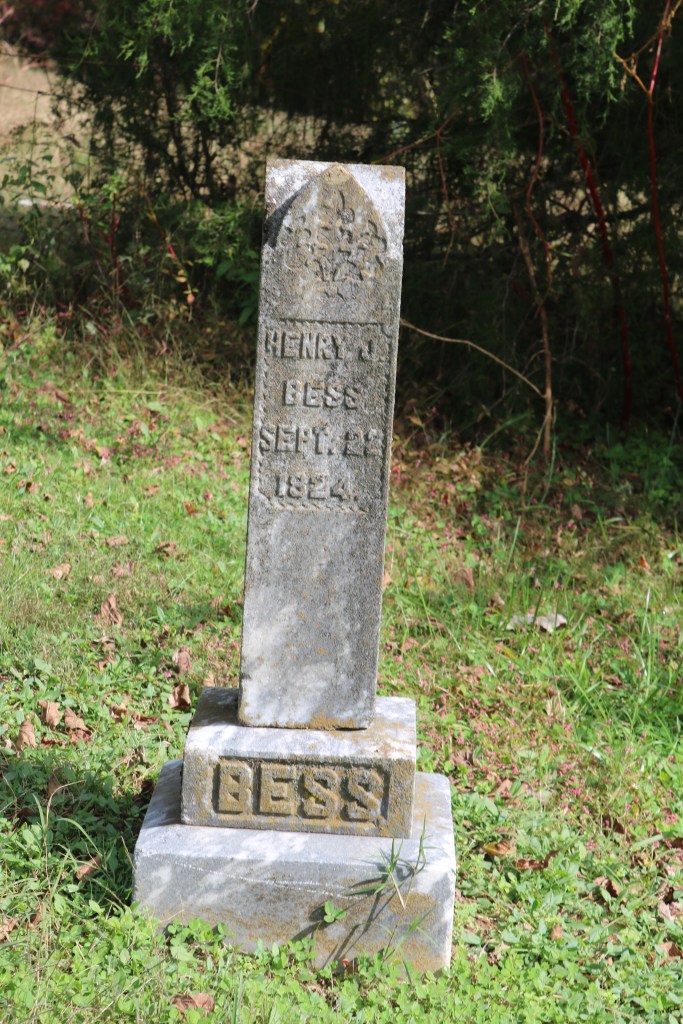
His father Henry Bess would pass away in 1924, and I suspect this may have been the catalyst for his relocation to Putnam County by 1930. Bess passed away in 1937 and was buried in Nashville.

 Trix's Trax